France Is a Warning. America Should Be Paying Attention.
I'm all for immigration, but France shows what happens when it outpaces integration. Borders, laws and a shared culture are what hold a nation together.
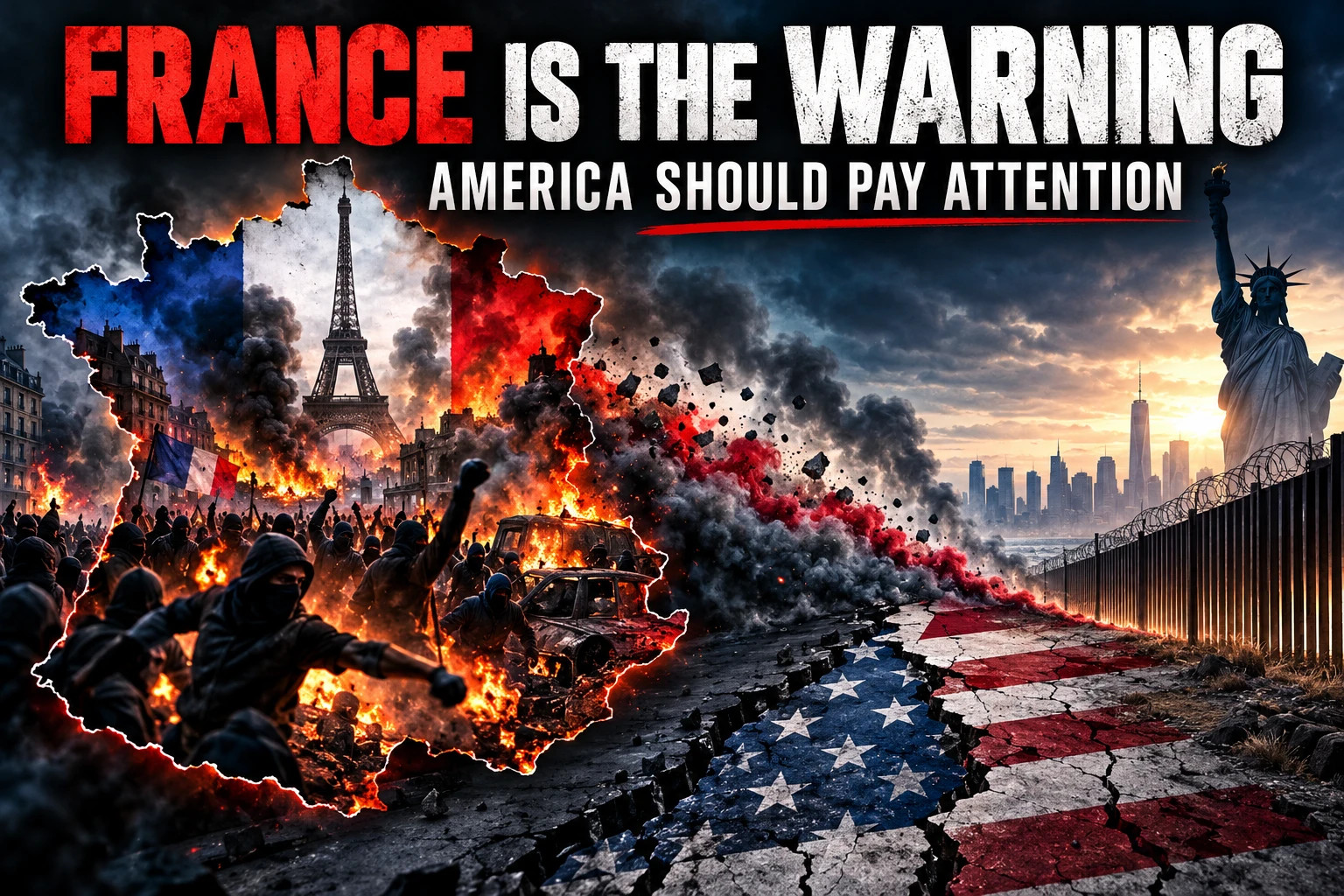
At some point, we need to have an uncomfortable conversation about immigration. Not because immigration is inherently bad, but because we’ve apparently decided that borders are optional, immigration laws are suggestions, and expecting people to assimilate into the country they’ve chosen to live in is somehow racist.
And if you want to see where that kind of thinking can lead, take a good hard look at France.
France is wrestling with serious questions about immigration, national identity, integration, and the limits of its social safety net. According to France’s national statistics office, approximately 8 million immigrants lived there in 2025, representing 11.6% of the population. That’s nearly double the percentage in 1968. Many are legal residents or naturalized citizens, and plenty contribute to French society. That isn’t the argument.
The problem is what happens when immigration, integration, and enforcement don’t keep pace with one another. France recorded more than 175,000 apprehensions of people with irregular immigration status in 2025. Meanwhile, immigrants experience substantially higher unemployment than nonimmigrants, even as many second-generation families demonstrate real progress toward integration.
These aren’t all the same problem, and immigration didn’t cause every difficulty France faces. But pretending there are no serious consequences when a country struggles to integrate newcomers isn’t compassion. It’s denial.
I believe a nation is defended first by its borders, second by its laws, and third by its culture.
Borders define where a country begins and ends. Laws establish the rules by which its people agree to live. But culture? Culture is the glue that holds the entire damn thing together. It’s the shared values, traditions, language, history, and sense of belonging that turn a collection of people into an actual nation.
And somehow, we’ve decided that protecting that culture is offensive.
Here’s something else I believe: Immigration without assimilation is an invasion. Not a military invasion, but a gradual erosion of the shared identity that makes a nation something more than a geographical designation. If enough people arrive with no intention of participating in the society they’ve joined, you risk creating separate populations living under the same flag but with fundamentally different ideas about what that flag represents.
Now, before somebody starts screaming about racism, let me explain something.
I am absolutely in favor of immigration.
You want to come to America, become an American citizen, work hard, build a business, raise a family, contribute to society, and chase the American dream? Hell yes. Welcome aboard. I don’t give a damn what country you came from, what color you are, or what language your grandparents spoke.
But if your intention is to live here indefinitely, ignore our laws, reject our fundamental civic values, and expect American taxpayers to support you while you contribute nothing? Why should we encourage that?
And yes, people are going to tell me undocumented immigrants generally don’t qualify for federal welfare. That’s largely true.
Except states have created their own programs.
California expanded full Medi-Cal healthcare coverage to income-eligible undocumented adults, although it froze most new adult enrollments in January 2026. New York City spent approximately $3 billion in fiscal year 2025 providing shelter and services to asylum seekers. Not all those people entered illegally, but the money is real.
Three billion dollars. In one city. In one year.
At what point do we ask whether our generosity has exceeded our ability to pay for it? When does compassion without boundaries become self-destruction?
And there’s another uncomfortable question: What about the people controlling the levers of government?
America allows naturalized citizens to serve in Congress, and our Constitution explicitly permits it. That’s part of what makes America extraordinary. Someone can arrive here, embrace this country, become a citizen, and eventually help govern it.
But that privilege comes with an obligation.
Your oath is to the United States Constitution, not to the government, political movements, or competing interests of the country you left behind.
And that standard should apply just as fiercely to politicians born in America. Birthplace doesn’t establish loyalty. Actions do.
Which brings me back to France.
France’s challenges aren’t proof that immigrants are inherently unwilling to assimilate. They’re a warning about what happens when integration becomes difficult, public trust deteriorates, and governments struggle to reconcile competing expectations about national identity.
America should be learning from that, not dismissing the subject as something we’re apparently too enlightened to discuss.
I’m not demanding that immigrants forget where they came from. Celebrate your heritage. Speak your language. Fly your old flag next to the American one. That’s part of America’s story.
But understand that becoming American means joining something that already exists. You bring your heritage to America; you don’t get to demand that America abandon its fundamental principles to accommodate yours.
A country can be welcoming without being a doormat. It can be compassionate without being foolish. And it can insist on borders, laws, and a shared civic culture without apologizing for its existence.
Because here’s the part we seem determined to forget:
Borders protect the territory. Laws protect the republic. But culture protects the nation. Lose that, and you lose everything.



Letters to the Editor
Agree, disagree, or set me straight. The comments are open.