The World Has a Main Character Problem
Garden-variety narcissism is everywhere. Everybody's the main character, nobody's ever wrong, and nobody wants to play a supporting role anymore.
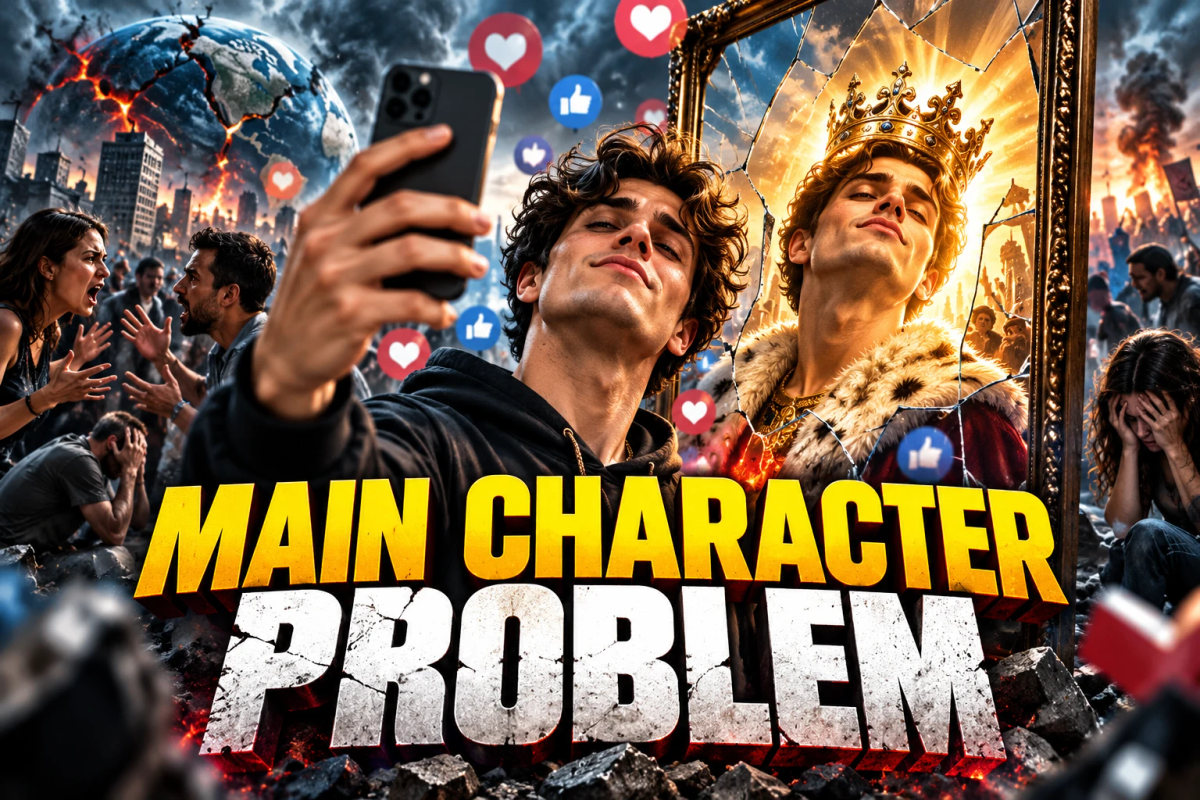
I’ve come to the conclusion that narcissism is responsible for approximately 90% of the problems we have in the world today.
No, I haven’t conducted a peer-reviewed study, and I didn’t spend six years at Harvard interviewing narcissists (although frankly, I suspect I’d have a hard time finding participants willing to admit they qualify).
But the more I watch people interact, the more convinced I become that an astonishing amount of the bullshit we deal with boils down to one fundamental problem: people have become convinced that the entire fucking world revolves around them.
I’m not talking about actual narcissistic personality disorder, which is a legitimate psychological diagnosis. I’m talking about the garden-variety, everyday, socially acceptable narcissism that seems to be spreading faster than stupidity at a political convention.
It’s the kind where your feelings matter more than someone else’s rights and your opinions are automatically correct because they’re yours. If you’re offended, someone else must have done something wrong. You disagree with me, so you’re attacking me personally. Being inconvenienced counts as an injustice, and somehow every criticism is abuse.
Society is absolutely overflowing with main characters at this point, and apparently nobody wants to play a supporting role.
Everybody’s special, nobody’s wrong
There was a time when being an adult meant occasionally admitting you were wrong. You’d say something stupid, somebody would correct you, you’d feel like an idiot for five minutes, and then you’d move on with your life. Maybe you’d even learn something.
These days being wrong apparently counts as a traumatic experience, the sort that calls for emotional support and a public apology, possibly with a congressional investigation to follow. People have gotten so emotionally invested in their own opinions that challenging those opinions feels like challenging their very existence, and this is where narcissism becomes genuinely destructive.
Somebody who believes they’re inherently right has absolutely no incentive to listen. Treat your feelings as the ultimate measure of truth and facts become optional, and once you’ve decided that anyone who disagrees with you is morally inferior, compromise is off the table. You could explain an enormous portion of modern politics with that chain of logic, and if it sounds familiar, well, congratulations.
Social media poured gasoline on the fire
I don’t think social media invented narcissism. Human beings have been self-absorbed assholes since the dawn of civilization. What social media did was figure out how to monetize it, and that’s worth thinking about for a minute.
There are trillion-dollar industries built on persuading people that their opinions deserve an audience. Breakfast deserves a photograph now, relationships apparently need spectators, and any emotional reaction you have is supposed to be validated immediately. Then the algorithms reward it. The louder you are, the more attention you get, and the more outrageous your opinion, the more engagement it generates. Present yourself as a victim and people will rush to reassure you that you’re absolutely right and everyone else is terrible.
Narcissism got normalized, sure, but it also got a microphone and an audience and a revenue stream out of the deal, and then we acted surprised when everybody started screaming.
The death of personal responsibility
Here’s the part that really gets under my skin: narcissism and personal responsibility are fundamentally incompatible, because taking responsibility requires acknowledging that you might actually be the problem. And God forbid we entertain that possibility.
If your marriage failed, it was obviously because your spouse was toxic. You got fired because your boss was an idiot, your business collapsed because the economy was rigged against you, and if somebody doesn’t like you, they must be jealous, insecure, or threatened by your greatness.
Now, sometimes your spouse really is toxic, your boss really is an idiot, and life genuinely deals people a shitty hand. But sometimes you’re the asshole.
Sometimes you made a bad decision, or you were lazy, or you hurt somebody. Sometimes you failed because you just weren’t good enough at what you were trying to do. And that’s okay; it’s called being human.
What’s not okay is constructing an entire alternate reality in which you’re perpetually the hero, perpetually the victim, and somehow never responsible for anything that happens in your own life. How the hell are you supposed to grow as a person when you’ve convinced yourself there’s nothing about you that needs improving?
It’s not just other people
Before somebody gets the impression that I’m standing on a mountain looking down at all the narcissistic peasants, let me make something clear: I’m guilty of some of this shit too. We all are.
I’ve been stubborn. I’ve argued a point long after realizing I might be wrong, and I’ve taken things personally that probably had absolutely nothing to do with me. Every so often I’ve been so convinced of my own brilliance that reality had to slap me upside the head.
Everybody has an ego, so the difference isn’t whether you have one. It’s whether you’re willing to tell that ego to shut the fuck up occasionally.
In practice that looks like apologizing without tacking on a dozen excuses, or listening to someone you disagree with instead of quietly preparing your rebuttal while they talk. It means celebrating somebody else’s success without making it about yourself, and admitting that someone you dislike might actually be right about something. Can you simply accept that the world doesn’t owe you a goddamn thing? Apparently these have become revolutionary concepts.
Civilization requires something we’ve forgotten
The bigger problem is that civilization only works when people understand that other people matter.
That means accepting inconveniences and making compromises. It means respecting boundaries, following rules even when you don’t particularly like them, and occasionally sacrificing something you want because somebody else has an equally legitimate claim. It means understanding that freedom isn’t the same thing as getting your way.
Narcissism turns relationships into competitions and disagreements into battles, and even an ordinary social interaction becomes a chance to establish who’s more important. Bring that mindset into a marriage and you get resentment and divorce. Toxic management and miserable employees are what it does to a workplace. Politics ends up with leaders who care more about winning than governing, and a whole society fills up with millions of people who demand respect and won’t extend any themselves.
Then everybody stands around wondering why the world has become such an angry, miserable place, complaining that society has stopped respecting you, when maybe the real trouble is that we’ve forgotten how to respect anybody else.
You’re not the main character
Look, I don’t actually believe we can scientifically attribute 90% of the world’s problems to narcissism. Disease exists. So do natural disasters, poverty, corruption, genuine injustice, and plain old bad luck.
But I do wonder how many problems we could eliminate, or at least make dramatically less miserable, if people developed just a little humility. Picture politicians admitting they were wrong, or social media users considering that they might not understand the whole story, or someone losing an argument and responding with, “You know what? That’s a good point.” Picture people being more interested in understanding one another than in proving how morally superior they are. What an absolutely radical fucking concept.
We spend an enormous amount of time demanding that the world change to accommodate us, and hardly any asking whether we might be the ones who need to change. Maybe that’s the real problem. We raised generations of people who were told they could be anything, and far too many decided to be the center of the universe.
The world doesn’t need more main characters. It needs more people who understand that everybody else has a story too.

Letters to the Editor
Agree, disagree, or set me straight. The comments are open.