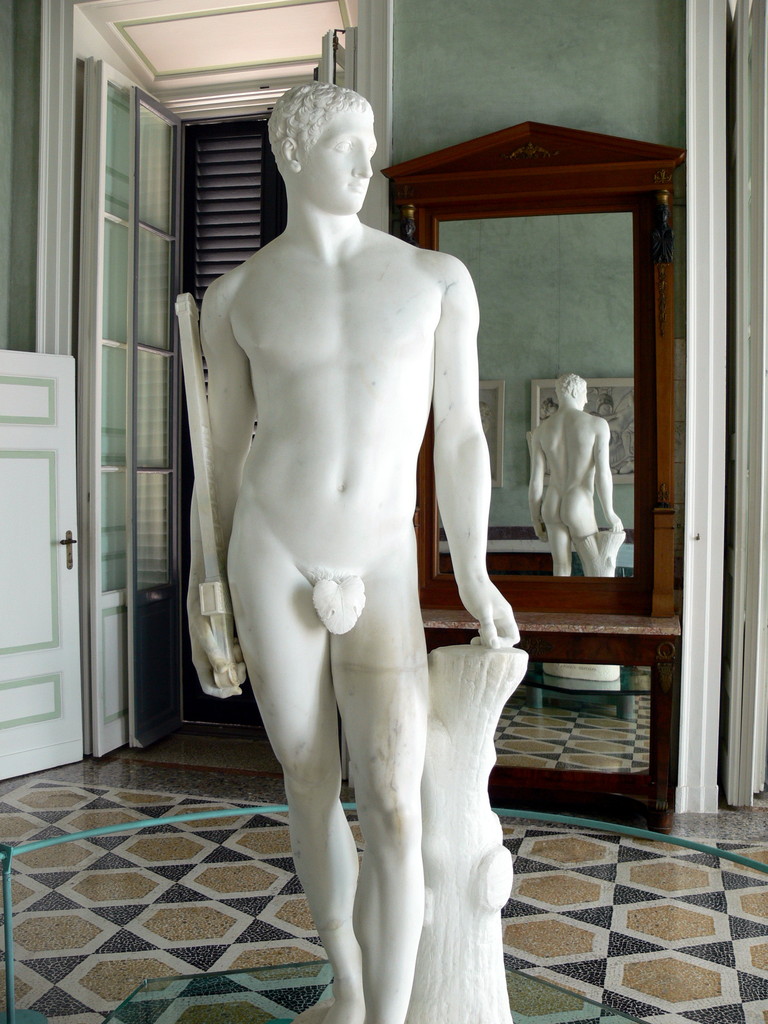
Palamedes, son of Nauplius, invented dice and several letters of the alphabet. He outwitted Odysseus into joining the expedition against Troy — and Odysseus never forgave him. During the war Odysseus forced a Trojan prisoner to write a forged letter, as if sent by King Priam to Palamedes, then buried gold in Palamedes' tent and dropped the letter in camp. Agamemnon read it, found the gold, and handed Palamedes to the army to be stoned as a traitor.
The long version
The story, in chapters
How the cleverest man at Troy talked another man into the war — and was destroyed by him for it.
-
The Oath of Tyndareus
A war the kings had all sworn to fight
Because of the Oath of Tyndareus, many rulers across Greece were bound to join the coalition forming to sail on Troy — to recover Helen and the Spartan property Paris had stolen, by words or by force. The catch: the oath had been Odysseus' own invention.
-
Odysseus dodges the draft
The feigned madness
An oracle had warned Odysseus that if he went to Troy he would come home alone and in need, his comrades lost, after twenty years. So when the envoys Palamedes, Menelaus and Nestor came to Ithaca to hold him to his oath, Odysseus put on a cap, yoked a horse and an ox together to the plow, and pretended to have lost his mind.
-
Palamedes sees through it
The child in front of the plow
Palamedes wasn't fooled. He snatched the infant Telemachus from his cradle and set him down in the path of the plow, daring Odysseus to drive through his own son. Odysseus stopped — and in stopping, confessed the madness was an act. He agreed to go to war. From that moment he hated Palamedes, oath of his own making or not.
-
At Troy
Odysseus plots, night and day
Having been dragged to the front, Odysseus never forgot being outwitted. He worked against Palamedes constantly. The plan he settled on was patient and cruel: he compelled a captured Trojan to write a letter of treason, made to look as if King Priam himself had sent it to Palamedes.
-
The frame-up
Buried gold and a planted letter
Odysseus buried gold beneath Palamedes' quarters and let the forged letter be found in camp. In another telling, he used a "warning in a dream" to convince Agamemnon to move the camp for a day, hid the gold where Palamedes' tent had stood, handed a doomed prisoner a letter for Priam, and had him killed nearby so the letter would be discovered on the body. It read: "Sent to Palamedes from Priam" — promising him as much gold as Odysseus had hidden, in exchange for betraying the camp.
-
The verdict
Guilty of a treason he never committed
Brought before Agamemnon, Palamedes denied everything. But he could convince no one — not the king, not the army — once soldiers dug beneath his tent and pulled up the gold that sly Odysseus had planted there. An unjust judgement, sealed by evidence that had been manufactured to seal it.
-
The end
Stoned by the whole army
And so Palamedes was stoned to death by the entire host — the same men he had taught to read and to count. Others say there was no plot at all, and that Odysseus and Diomedes simply drowned him while he was out fishing. Either way, the cleverest man at Troy was killed by the men he'd made clever.
-
An echo, after Achilles
Ajax names the trick
When Ajax and Odysseus later competed for the dead Achilles' arms, Ajax threw the whole affair back in Odysseus' face:
"Shall Odysseus appear the better man, who came last to arms and by feigned madness shirked the war, till one more shrewd than he — the son of Nauplius — uncovered this timid fellow's trick and dragged him forth to the arms that he shunned?" — Ajax. Ovid, Metamorphoses 13.34
-
A father's claim
Nauplius asks for satisfaction
When Nauplius learned that calumny and a rigged trial had killed his son, he sailed to the Troad and demanded satisfaction from the Achaean leaders. But all of them sided with Agamemnon, who was shielding Odysseus, and Nauplius went home with nothing.
-
The reckoning
A brother collects the debt
Agamemnon survived the storm at Cape Caphareus and made it home. But Palamedes' brother, Oeax, had been working his own revenge: he told Agamemnon's wife Clytaemnestra that Cassandra was being brought home as a concubine. And so, on his arrival, Agamemnon was murdered by his wife and her lover Aegisthus. The wrong done to Palamedes was paid for in the end — just not by the man who did it.